 Discover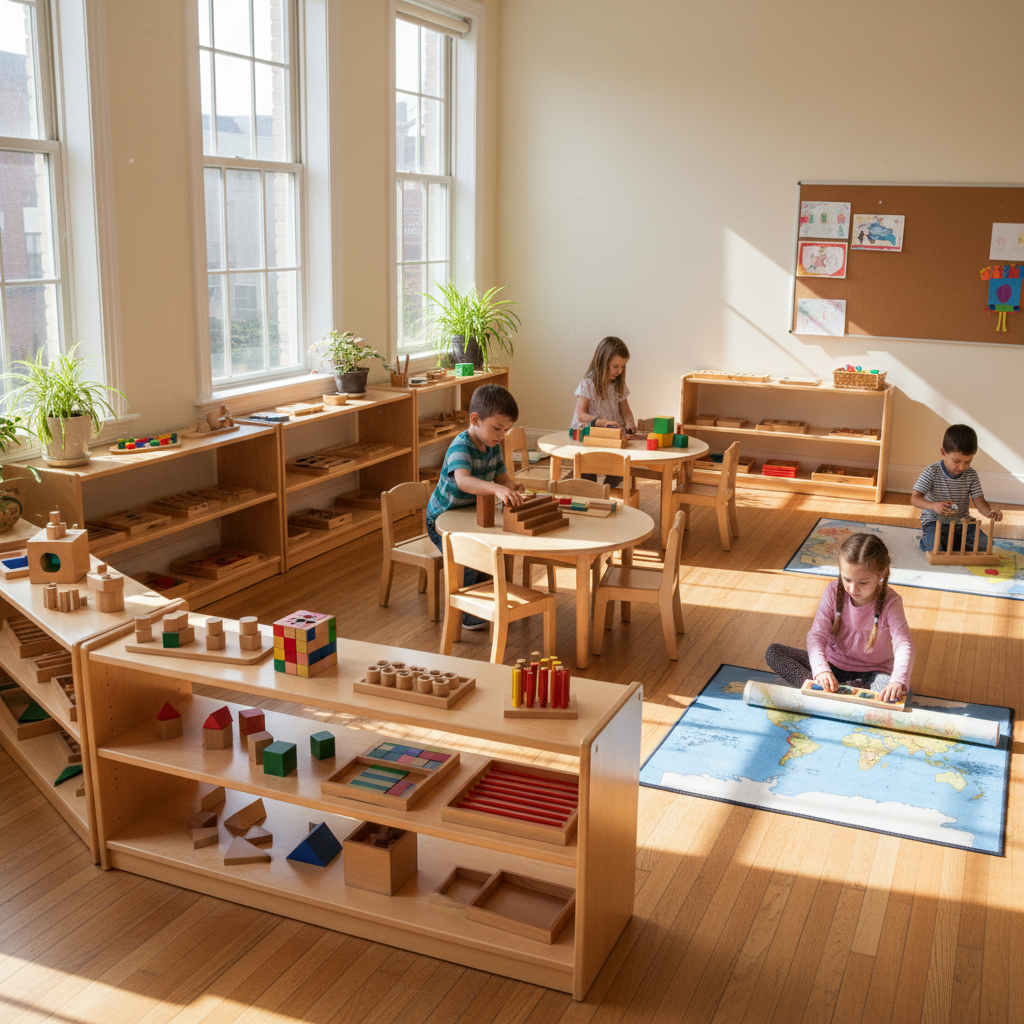
Who are you?
Before you decide on preschool, kneel beside a low wooden shelf.
Watch a three-year-old choose their own work. Pour their own water. Correct their own mistake — without being told. This is what learning looks like when it's allowed to be unhurried.
Children are not vessels to be filled.
They are fires to be lit.
The Montessori method, developed by Dr. Maria Montessori in 1907, gives children a prepared environment where every material on every shelf is designed to invite concentration, independence, and joy. We follow one child's year — season by season — to show you what this looks like in practice.

The tearful drop-off you're bracing for? It ends by week three.
Lila was 3 years and 2 months old when she first walked through our door. She cried for eleven minutes on day one. By the end of week two, she was pouring her own water from a glass pitcher, wiping the table herself, and choosing her next work without asking anyone's permission. The environment does this. The shelves invite. The children respond.
“I expected her to need me. I didn't expect her to not need me — and to be genuinely proud of herself about it.”
— Priya R., parent of Lila, age 3Montessori vs. Traditional Pre-K
at every developmental stage
Rows reorder based on your family type. Tap any row to see what the difference looks like in practice — not in theory.
| What We're Comparing | Discover Montessori Our approach | Traditional Pre-K Typical program |
|---|---|---|
Top for youReading Readiness tap to expand | Child-led, sensory-first by age 4–5 | Group instruction, grade-level benchmarks |
Independence & Self-Care tap to expand | Daily practical life: pouring, folding, food prep | Adult-directed routines; limited self-service |
Social Development tap to expand | Mixed-age classrooms (3–6); peer mentorship built in | Same-age peers; adult-mediated social learning |
Transition to Kindergarten tap to expand | Typically ahead in reading, math, and executive function | On-track for state benchmarks |
Sensory & Movement tap to expand | Movement integrated into every lesson; sensory materials throughout | Structured seat time; recess as designated movement |
Teacher-to-Child Ratio tap to expand | 1:8 at Discover Montessori | 1:12 to 1:20 (state average) |
Data drawn from Lillard & Else-Quest (2006), Rathunde & Csikszentmihalyi (2005), and our own 18-year enrollment outcomes.
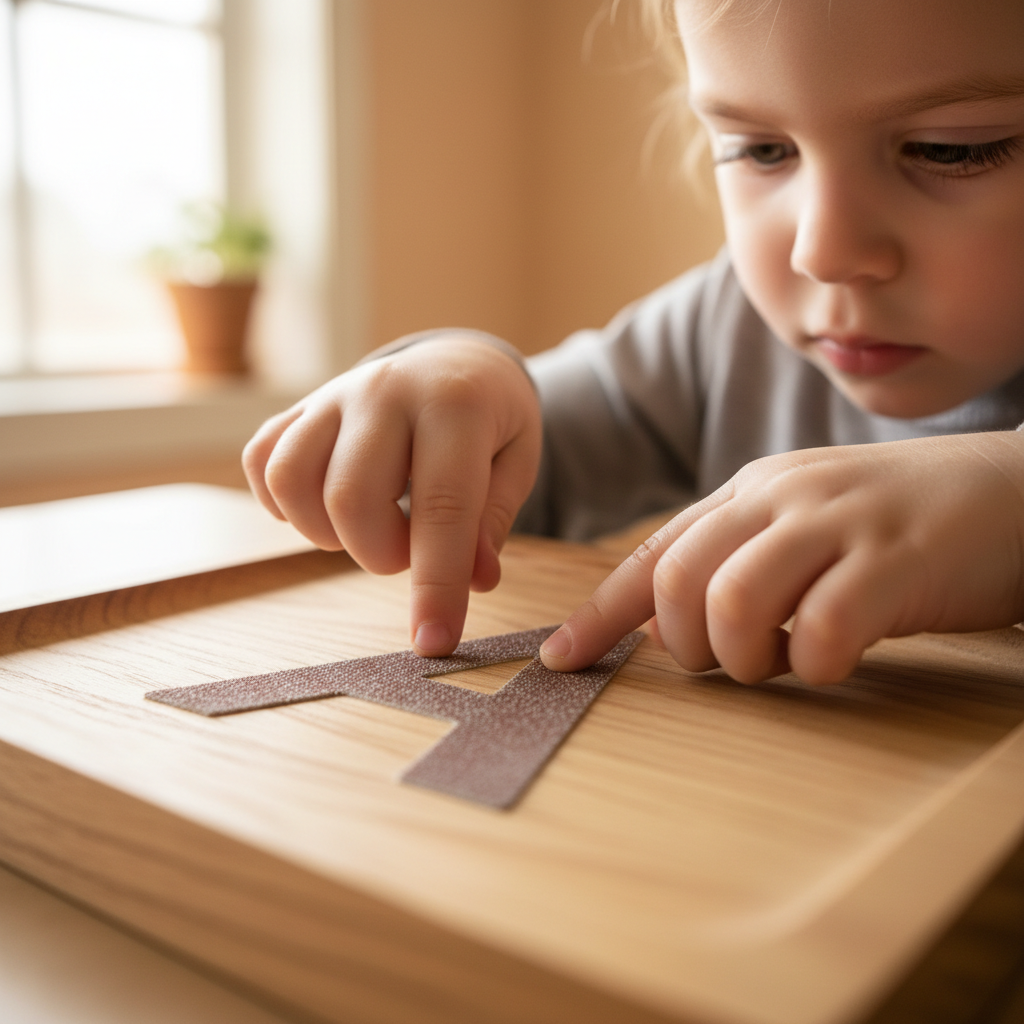
She came home spelling her name in cursive. You didn't teach her that.
The Montessori reading explosion is real, and it is sudden. One morning in January, Lila traced the letter "a" for the forty-seventh time — and something clicked. By February she was reading three-letter phonetic words. By March, she was sounding out the names on classroom labels. Our teacher hadn't pushed. The environment had prepared. The child had decided.
“She corrected my spelling of "because" at breakfast. I let her.”
— David K., parent of Sofia, age 4
By April, your child is the one showing the new kids where things go.
The mixed-age classroom was the piece you were most uncertain about. By spring, it became the piece you'd never give up. Lila, now nearly 4, had become an unofficial guide for the three-year-olds who arrived in January. She showed them how to roll a mat. How to carry the pink tower with two hands. How to say "I'm working" when someone interrupts. She learned by teaching. She grew by giving.
“The moment I realized the mixed-age classroom wasn't a compromise — it was the whole point.”
— Amara T., early childhood therapist & parentFamilies who walked through the door
“I came in skeptical of the "child-led" language. I left convinced. The classroom runs itself — because the children run it.”

“We moved in August. By October, Sofia had a best friend and a reading practice. That's not luck. That's the environment.”

“Second time around, I stopped worrying and started watching. James taught his sister to fold a napkin in November. I cried.”

Book a Morning Visit
Visits run Tuesday through Thursday, 8:30–11:00am during an active work cycle. You'll kneel beside the shelves. You'll watch children work. You'll understand.
What a Montessori Morning
Looks Like
A free, illustrated PDF walking you through a real 3-hour work cycle — minute by minute, from arrival through snack prep to the first independent reading attempt. No jargon. Just what actually happens.
Email only. No sales calls, no weekly newsletters unless you opt in.
Discover Montessori
Discover Montessori is affiliated with the Association Montessori Internationale — the organization founded by Dr. Maria Montessori herself in 1929.